
| Family |
| Women's Health |
| Men's Health |
| Kid's Health |
| Healthy Over 50 |
| Disease |
| Prevent Cancer |
| Healthy Heart |
| Healthy Lifestyle |
| Natural Drugs |
| Your Health Profile |
| Find Calories |
| Body Mass Index |
| Body Fat Calc. |
| Metabolic Typing |
| Education |
| Health Terms |
| Toxic Chemicals |
| Cancer Treatment |
| Herbs and Spices |
| Medical Condition |
| Back Issues |
| Health History |
| News & Views |
| Web Blog |
| Health News |
| Health Editorials |
| FAQs |
| Weight |
| Weight Loss |
| Exercise |
| Search |
| Site Search |
| Topics by Index |
| Sites of Interest |
| Food |
| Product Watch |
| Hard Gainer |
| Nutrition |
| Condiments |
| Miscellaneous |
| Tell Your Story |
| Success Stories |
| Book Store |
| About Me |
Sign up for Your Health & Wellness
Your Health & Wellness will present articles concerning all aspects of weight management: nutrition, exercise/active lifestyle, and dietary supplements. You will learn how to work with your body and not against it. This email magazine is free of charge and there is NO obligation on your part.

For the very best in organic products (supplements, skin care products, free-range/grass-fed meat, i.e., beef, bison, chicken, ostrich, mercury-free salmon, organic blueberries go to www.Mercola.com.



Living A
God-Glorifying Life Through Good Health.
(Featured on CNN)
When I was growing up in the '50s and '60s, there was no obesity epidemic, and children were not
developing old-age maladies such as heart disease. Cancer, Alzheimer's, and autism were virtually
unheard of. Living a healthy lifestyle was a lot easier.
More...
Living A Healthy Lifestyle is powered by Site Build It!


Remaining Healthy Over 50 Requires Careful Attention to Nutrition |
In order to be as healthy over 50 as you were in your 20s and 30s, special attention must be given to nutrition, a healthy weight, and exercise. As we age, our bodies grow less efficient in the way it operates. There are also hormonal differences which effect libido, lean body mass, fat storage, etc.
 The standard American diet (SAD) affects our being healthy over 50. More and more of the world's food is becoming refined and less raw and whole. This has the affect of compromising the body's ability to fight disease and toxins.
The food we do eat is not prepared and raised the way it was in our grandparents days. It is now subjected to hormones, antibiotics, pesticides and herbicides, genetically-modified organisms (GMOs), along with artificial preservatives, artificial colors, artificial sweeteners (high fructose corn syrup, saccharine, ect.), and artificial flavors (such as monosodium glutamate.)
The chemicals in our food create health-destroying free radicals in the body. These scavengers prevent you from being healthy over 50. And because we are not receiving the nutrients in our diet to combat free radicals, we age prematurely and suffer all types of chronic and debilitating illnesses.You see, the foods we eat create free radicals. And since the majority of our diet is composed of refined foods, we don't eat the whole foods which contain the only substance that can nullify free radicals-antioxidants.
The ideal nutrition plan should be low-salt (sodium), low fat, and include plenty of fiber. Fat should come from fish (good source of omega-3 and omega-6 fatty acids), nuts (polyunsaturated fats), extra-virgin olive oil (monounsaturated fat), extra-virgin coconut oil, and conjugated linoleic acid.
Don't be afraid of eating a reasonable amount of saturated fat. Your body needs it (Read...)
Being healthy over 50 includes increasing protein intake to compensate for the natural decline in muscle and increase in body fat. Good, low-fat sources of protein include fish, lean and organic beef, chicken, and turkey, and fermented soy products such as tofu.
The foods which should make up the bulk of our diets to remain healthy over 50 are fruits and vegetables-plenty of fruits and vegetables! Fruit and vegetables are loaded with phytochemicals (phyto means 'plant'.) Many of these phytochemicals are antioxidants. They along with beta carotene (a form of vitamin A), C, and E are enemies of free radicals.
As we age, our bodies have trouble absorbing certain nutrients from foods. One such nutrient is vitamin B-12. With each passing decade after the age of 50, atrophic gastritis becomes problematic. This condition disrupts digestion, allowing certain bacteria to flourish and thereby interfering with the absorption of vitamin B-12.
Seniors also may experience low levels of vitamin B-6, interfering with being healthy over 50. This nutrient is important in the manufacture of red blood cells. B-6 also improves the efficiency of enzymes responsible for the digestion of food (protein, carbs, fat.)
Not only is absorption a problem for people over 50, we also begin to lose essential substances. Women begin losing calcium from their bones at the age of 30. It accelerates after the age of 50. Women's calcium requirements increase from 1,000 milligrams (mg) from ages 19 through 50 to 1,200 mg after 50 (Read...)
What most people seem not to realize is that energy requirements drop after the age of 30. This is true for men and women. By that time usually our careers are in full swing, and we may even have started a family. Unless you are a professional athlete, or dedicated fitness buff (like yours truly), the only exercise you get is chasing your kids or running to catch the bus.
With food that has been compromised with deadly chemicals, supplementation is a MUST, especially to those who want to be healthy over 50. I recommend a good multivitamin/multi mineral vitamin. I also recommend one that has been formulated with the healthy over 50 plus generation in mind.
That being said, how do you go about choosing the right supplement from the dozens available? I would eliminate the supplements that are store brands. Although they may be cheaper, you will ultimately lose because you are not getting the nutrients you need.
According to Dr. David Williams, a proponent of alternative health, "...not all multivitamins contain the specific vitamins and minerals you need to stay healthy and feel young-especially if you're over 50. In fact, most of today's popular multivitamins provide just the bare bones of what you need."
Make sure that your supplement choice is not synthetic. Your body doesn't process and assimilate synthetic vitamins the way it does vitamins made from natural ingredients. Synthetics are a cheap and ineffective alternative to natural supplements.
Check the ingredient list and make sure your multivitamin/mineral contains the following nutrients in the form given (for instance, vitamin A as beta carotene, retinyl palmitate:
An article appearing in the Journal of American College of Nutrition states that multivitamin and minerals as 'nutrition supplements' may assist older adults reduce their risk of chronic diseases.
Research was conducted on 80 adults between the ages of 50 and 87 who were already eating a nutrient-dense diet. The study was double-blind, placebo controlled which lasted 8 weeks.
Researchers concluded that supplementation with a multivitamin formulated at about 100% Daily Value (DV) can increase vitamin status in older adults. They also concluded that it can improve older adults' micronutrient status levels associated with reduced risk for several chronic diseases.
To remain healthy over 50, special attention has to be paid to general fitness and health. Together with adequate nutrition and supplementation you are guaranteed a quality life.
A quality life is a life without significant health concerns. You are not dependent on prescription medication or a nursing home. Neither are you dependent on a caregiver. You remain independent.
"...Of those who reach age 65, according to the U.S. Department of Health & Human Services and Americans for Long-Term Care Security, 40% will spend time in a nursing home and 5% will require long-term care at some point..." (The Truth About Money [Emphasis mine]; pg. 12.)
Of course you do not have to be a part of that statistic. You can be healthy over 50. People today seem to be under the misconception that it's all downhill after reaching the golden age of 50. Nothing could be further from the truth. And it's a mistake for anyone reaching that age to abandon all fitness-related physical activity.
I am currently 56 years old and I lift weights 4 days a week at Diamond Gym in Maplewood, New Jersey. One of my training partners is 68 years old. There is also a member at Diamond Gym who is 80 years old! He has been weight training for over 50 years! So much for the 'I am a senior citizen so now I can lay down and die' attitude. We can all be healthy over 50.
Remaining healthy over 50 cannot be accomplished without exercise. Exercise strengthens your body's immune system and makes you INSULIN SENSITIVE. Insulin sensitivity is a factor towards minimizing the risk of developing diabetes, certain forms of cancer, obesity, heart disease, etc.
A strength training study was done with 54 women ages 30 through 50 to determine its effect on several risk factors which can lead to breast and colon cancer. The study lasted 9 months and measured changes in body fat percentage, waist size, fasting insulin, fasting glucose, and insulin-like growth factor I (IGF-I). There was no nutritional diet associated with this study. The women used weights to strength train only twice a week.
This strength training regimen produced an increase in lean body mass (muscle), and reductions in body fat percentage and fasting insulin and glucose levels. Amazingly, it only took 15 weeks to achieve these measurable results. A strength training program can also be implemented to help prevent a recurrence of breast and colon cancer, and to remain healthy over 50.
One of the primary effects of exercise is that it pushes insulin levels down. There have been several studies undertaken throughout the world to determine why centenarians live as long as they do. The study subjects varied in lifestyles. Some smoked, others didn�t. Some exercised while others didn�t. Some also drank, others didn�t. The only common denominator between all centenarians studied was that they all had low insulin levels for their age.
At one time it was thought that the only purpose of insulin was to lower the body's blood sugar levels. It is now known that the primary purpose of insulin is to store excess nutrients such as carbohydrates and magnesium.
Centenarian studies have shown that insulin sensitivity is the major indicator for lifespan. If a persons cells are not sensitive, insulin levels skyrocket. Hence we have the term insulin resistance. Insulin resistance is the cause of the disease of aging. The symptoms of this disease of aging are what the medical profession looks upon as the disease itself�cancer, osteoporosis, diabetes, heart disease, obesity, etc.
Whenever the body's cells are exposed to insulin, they become more resistant. This is normal and cannot be stopped. The rate however can be controlled. When insulin resistance increases, we age. Remember from the centenarian study that all participants had low insulin levels. It is believed that we can push the boundaries of life even further than 100 or 110. Centenarians should be able to live to 120, 130, or even 140 years!
Esophageal cancer is one the rise for people ages 55 to 85 years old. One of its risk factors is obesity.
The amino acid L-carnitine is very important for remaining healthy over 50. It delivers omega-3 fatty acids to mitochondria, assists in protecting cells from damage, raises the levels of enzymes needed to metabolize carbohydrates, helps to boost cellular strength, and helps to maintain muscle power.
The human body absorbs only about one-fourth of the L-carnitine from the food that we eat (predominately from meat, chicken, fish, and dairy products.) And as we age, the body produces less and less L-carnitine.
Researchers from the University of Catania in Italy conducted a study of L-carnitine on 66 participants who were at least 100 years old. They were divided into two groups. One group received a placebo while the second group received two grams of L-carnitine for six months.
The group which had the L-carnitine experienced significantly less physical fatigue after exercise. Also mental fatigue was less, total muscle mass was significantly higher while total fat mass was significantly lower.
The L-carnitine study results were published in the American Journal of Clinical Nutrition.
Depression and Healthy Over 50
Approximately 6 million Americans over the age of 65 suffer from depression. It lasts longer among the elderly than it does among our youth. Depression is also linked more to suicide among the elderly. They make up 12% of the population but account for 16% of the suicides.
Whites have rates of major depression much higher than Hispanics or blacks. After age 85, the suicide incidence among whites jumps to 350% higher than at age 65.
More and more vitamin D is looking like the proverbial cure-all. Researchers at the School of Medicine and Pharmacology, University of Australia conducted a study on the effects of vitamin D on falls. They recruited and tracked 302 women, ages 70 to 90. Each woman experienced a fall within the last year.
One group of women was given 1,000 IUs of vitamin D while the control group was given a placebo. Both groups were given 1,000 mg of calcium citrate daily. The group which was given vitamin D had a 19 percent lower rate of falls than the control group. It is known that vitamin D contributes to stronger muscles.
Gerontology and Healthy Over 50
 Merriam-Webster's on-line dictionary defines gerontology as: 'the comprehensive study of aging and the problems of the aged.' In a move that could very well threaten his professional career, Dr. Imre Zs.-Nagy, founder and editor-in-chief of the Archives of Gerontology and Geriatrics, has revealed that the mainstream gerontological movement has been smearing anti-aging proponents for the past fourteen years.
The anti-aging advocates defy the traditional disease-based, drug oriented paradigm of the modern medical establishment. Hence the fourteen year pattern of discrediting the American Academy of Anti-Aging Medicine, anti-aging physicians, and anti-aging practitioners.
Dr. Imre Zs.-Nagy says, �Quite to my astonishment and shock, I have been amazed to observe in many occasions, the complete disregard by certain individuals bearing some of the most prestigious affiliations in the gerontological establishment, for truth, academic integrity, and scientific professionalism.
Instead, they have waged a wanton effort to sabotage and retard a global movement of clinicians, practicing physicians on the front lines who have embraced that aging is not inevitable and is, indeed, preventable.�
Biogerotologist Aubrey de Grey believes the following seven factors are responsible for aging:
According to de Grey's hypothesis, if the above enumerated processes could be kept below the threshold of pathology, human life could be extended enormously. From a biological perspective, human life seems to set at a maximum of 120 years.
Sarcopenia and Healthy Over 50
Sarcopenia is defined as the age-related loss of muscle mass with its accompanying loss of function and strength. This muscle loss begins in about the fourth decade of life, and begins to accelerate at age 75.
Muscle atrophy is most noticeable in the fast twitch muscles. These muscles are recruited in high intensity, anaerobic activities such as weight training.
Although sarcopenia is associated with a sedentary lifestyle, it can also occur in individuals who remain physically active throughout their lives. This suggests that a sedentary lifestyle is not the only cause.
Other factors contributing to sarcopenia are motor-unit remodeling, decreased hormone levels, and decreased protein synthesis.
As you age, protein synthesis slows down as compared to someone younger. This results in the inevitable loss of muscle mass.
The factors leading to sarcopenia may all be eliminated with a program of progressive resistance training (weight lifting.) Studies have shown that progressive weight training increases hormone levels such as growth hormone (GT) and protein synthesis, and prevents muscle atrophy.
Healthy Over 50 and Aging Muscles
As you age, you begin losing a considerable percentage of muscle mass and gain body fat. Specifically, you lose muscle cells as you age. Damaged muscle cells are quickly repaired in youth. This doesn't happen as you reach your senior years.
Cheryl Phillips, president of the American Geriatrics Society, says, "So, if you look at a woman who is 70 years old and compare her to what her body was like at 25 years of age, even though her weight may be exactly the same, she had more percentage of muscle in her body when she was 25 than she does when she's 70."
Most of your calories are burned by muscle cells. And as you age, these cells begin to wear out. They cannot burn calories as efficiently as they once did. If you eat the same amount of calories as you did when you were young, they will contribute to unwanted body fat.
UCLA researcher and geriatrician Jonathan Wanagat says that there are many studies which show the value of exercise in preserving muscle mass.
"...We aren't sure exactly how exercise makes muscles stronger, but we know that when we measure the grip strength of the hands or feet, grip is strongest just after exercise, even among people in their 80s and 90s. So weightlifting at any age offers low risk and great benefit...," says Wanagat.
 Healthy Over 50 and Baby Boomers
Baby boomers, the post-World War II generation born between 1946 to 1964, has made the Guinness Book of Records if there were such a category. We are the first modern generation to be less healthy than our immediate predecessors.
Baby boomers are experiencing difficulties in everyday living. Getting out of bed, climbing a set of ten stairs without a rest, or getting up from a sitting position are proving to be a challenge.
Researcher Teresa Seeman concludes, "The baby boomers, whatever health benefits they've enjoyed up to now, may not enjoy a rosy old age."
The study Professor Seeman oversaw compared the health of thousands of men and women in their 60s, 70s, and 80s with data of different people collected ten years ago.
The findings? One out of five baby boomers in their 60s who were polled said that they needed assistance with their normal, everyday activities. This was up more than 50 percent from ten years ago. Boomers just over 60 were 70 percent more likely to need help walking from room to room, getting in or out of bed, eating, or dressing.
According to the researchers, the health problems suffered by the baby boomers are the result of fast food, sedentary lifestyle (lack of exercise), and an over-reliance on computers and other technological advances.
I explore these causes in detail in my latest book
Living A God-Glorifying Life Through Good Health (a guide to remaining healthy over 50.) Born in 1951, I didn't have misused technology to captivate
my attention. And, overall, food was better. One reason was that we didn't have nearly as many fast food restaurants
as we do today. Get your copy of my book here
and find out how we got to where we are now, and, more importantly, what can be done about it.
Source:
Dailymail.co.uk
Healthy Over 50 and Hypochlorhydria
Traveling along the path towards the AARP age is supposed to land you into your "golden" years. The American dream or aspiration for the golden years is to retire from decades of the "9 to 5" grind and to take life easy. You're expected to do the things you never had a chance to do like travel, play hours of golf, or just sit in a hammock and do nothing.
However, the reality is that many senior citizens are so beset with health and financial issues that they can't enjoy life as they should.
It is unfortunate but true that as one gets older, once peak operating body functions and hormones begin deteriorating and miss firing on all cylinders. One such reduction is the stomach's production of hydrochloric acid (HCL).
It is a well-known fact that many if not most people over the age of 50 underproduce hydrochloric acid. Not having an optimum production of hydrochloric acid results in the incomplete digestion of food. This means that many senior citizens are not receiving the necessary amount of nutrients from their food no matter what its quality.
The underproduction of hydrochloric acid leads to a non-acid environment in the stomach. This is not good. Although too much acidic food is no good, the stomach has to be acidic.
A less than ideal acidic environment in the stomach will not allow it to empty properly. That leads to GERD (gastro- esophageal reflux disease).
The acid facilitates the absorption of certain minerals such as calcium, selenium, zinc, and magnesium. The environment also kills harmful bacteria and yeast carried by the food we eat.
Hydrochloric acid is instrumental in breaking down protein. Inadequate amounts of the acid means that this food matter lies in the stomach fermenting.
The symptoms of the stomach not making enough hydrochloric acid are gas, bloating, allergies, and reflux. Traditional medicine assumes these symptoms are caused by the overproduction of hydrochloric acid. Mainstream doctors treat these symptoms with drugs - proton pump inhibitors like Prilosec or H2 blockers like Pepcid.
That assumption is false because the underproduction and overproduction of hydrochloric acid produce the same symptoms.
There is a simple and inexpensive way to determine if you have hypochlorhydria. It involves using a betaine hydrochloride supplement.
Step 1- take one capsule at the beginning of a meal; take note of how your stomach feels before eating and while eating. If you notice a burning sensation before taking betaine hydrochloride or it becomes worse after taking it, stop using the supplement immediately. Your stomach is making too much HCL.
Step 2- if one capsule didn't give you any unusual stomach uneasiness, take two capsules at the next meal; if two produces discomfort whereas one does not, use one capsule only.
Step 3- if two capsules of betaine HCL didn't hurt your stomach, try three at your next meal; if this doesn't give your stomach any discomfort, stay with three capsules before every meal.
Steps two and three indicates that your stomach is producing too little hydrochloric acid.
Taking betaine HCL serves to "retrain" the stomach to make an adequate amount of hydrochloric acid. How long should you stay with this routine? If depends on the individual. It can range from several weeks to several months.
If after several weeks or months you begin to feel a burning sensation when taking two or three capsules - whatever you have determined to be satisfactory for you in steps 1 through 3 - cut back by one capsule.
And after another length of time taking that one or two capsules produces a burning feeling in your stomach, cut back by one
capsule again. When you are no longer taking any capsules, your stomach is sufficiently able to produce enough hydrochloric acid
on its own.
Source: Modern Herbalist,
ProHealth.com
Healthy Over 50 and Mental Decline
It is unfortunate but a fact of life that as you age mental and physical health tend to decline. We are going to examine how the mental as well as physical downward spiral can be stopped or even reversed through weight training.
The term "senior moment" is a term used to describe when a person encounters a glitch in memory or mental processing. I remember recently that I went to Shoprite to buy a few groceries. When I went to the automated checkout counter to pay via my debit card, I forgot my pin number.
I have used my card hundreds of times without any problem but at that particular time I forgot it. I experienced a "senior moment".
We can all experience that any given time no matter what our age. Fortunately for me, cognitive impairment doesn't happen on a regular basis. If it did it could indicate more than an occasional cognitive malfunction.
Mild cognitive impairment is recognized as a risk factor for dementia. On a global scale, dementia is diagnosed every 7 seconds.
Back in the day people who used weights - typically your average bodybuilder - was looked upon as being muscle-bound and having muscles for brains. He was regarded as a dim-witted narcissist.
However medical science has now revealed that bodybuilders and weightlifters were onto something; not only were they building huge muscles and strength, but their mental capacity too.
But as I will show, no one has to strive to build Olympian sized muscles in order to fight age-related sarcopenia and mental decline. Progressive resistance training to fight cognitive decline is backed up by solid science. (I will be using strength training, progressive resistance training, and weight training interchangeably).
Science has shown that lifting weights is beneficial for things other than getting bulging muscles and building a "body beautiful". (I must admit that when I was in my late 20s to early 30s getting a body beautiful was my goal).
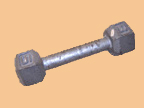 Weights are the key to halting brain
drain and loss of independent living due to muscle atrophy. That means it is not for young people or men only - but seniors
and women too. Its benefits extend far beyond the physique.
Weights are the key to halting brain
drain and loss of independent living due to muscle atrophy. That means it is not for young people or men only - but seniors
and women too. Its benefits extend far beyond the physique.
Of the two competing forms of exercise widely used, the latest scientific study has shown that strength training is superior to aerobic or cardiovascular training for preventing cognitive impairment.
The study participants were 86 senior women who had been diagnosed with mild cognitive impairment. After six months in the program and training twice a week, attention, memory, problem solving, and decision making had improved significantly through progressive resistance training.
David Blyweiss, MD was so impressed with this study, he has re-thought what he recommends to his patients and what he incorporates into his own health program.
He now recommends that his patients not only use the stairs instead of the elevator and walk more, but that they weight train at least two days a week.
I highly recommend you view this video. It
explains how anyone can safely incorporate weight training into their schedule.
Source: Science Daily
Advanced Natural Medicine. Blyweiss, David, J. April 10, 2012.
Healthy Over 50 Menu
Depression
Arthritis Falls
Keep Your Legs Strong Gerontology
Sarcopenia Baby Boomers Hypochlorhydria
Healthy living > Healthy over 50